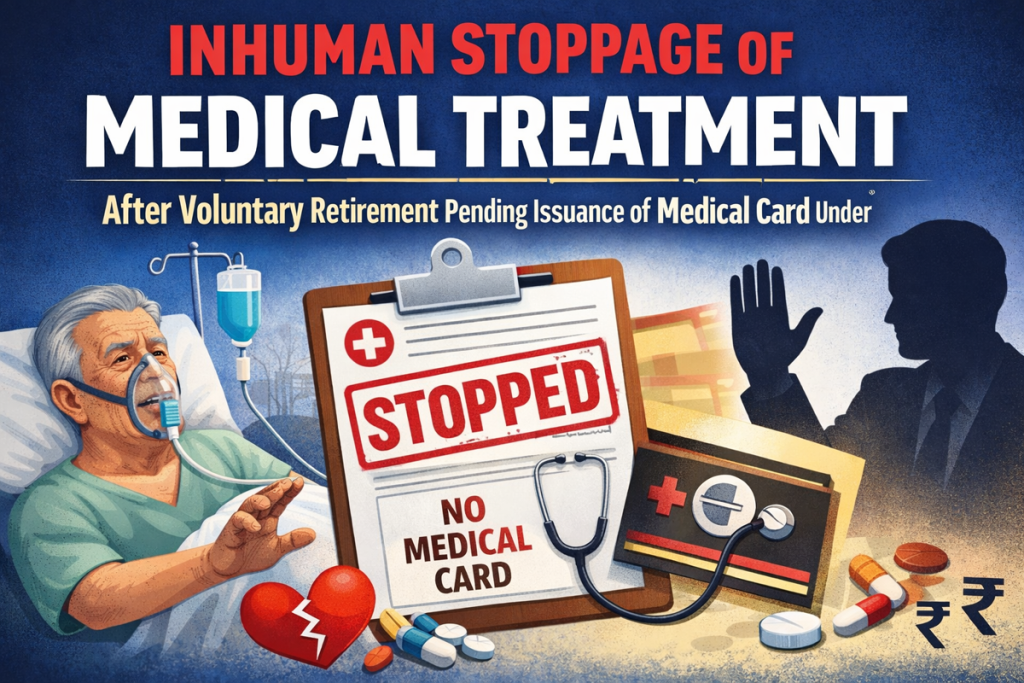
Retirement is meant to mark the beginning of a peaceful and secure phase of life after decades of dedicated service. However, for many employees who opt for voluntary retirement, this transition can become distressing when their medical treatment is abruptly stopped while they wait for the issuance of their Medical Card under the Retired Employees Liberalized Health Scheme (RELHS). Such a stoppage is not only administrative negligence but also a deeply inhuman act that places retirees at serious health risks.
Employees who choose voluntary retirement often do so after long years of service, contributing significantly to their organization. Many of them are senior citizens or individuals managing chronic illnesses such as diabetes, heart disease, hypertension, or other long-term medical conditions. Their treatment is not optional; it is essential for survival and maintaining quality of life. When medical services are suddenly withdrawn due to procedural delays in issuing the RELHS Medical Card, retirees are left vulnerable and anxious.
Administrative processes can sometimes be slow due to documentation checks, approvals, or internal procedures. However, such delays should never result in the suspension of critical healthcare services. The gap between retirement and the issuance of the medical card creates an unfair situation where the retiree is neither considered an active employee nor fully recognized as a beneficiary under the retirement health scheme. This bureaucratic void can have severe consequences, especially if the individual requires ongoing medication, regular monitoring, or emergency treatment.
Healthcare is a fundamental necessity, not a privilege that can be paused. A retired employee who has contributed to the system for years deserves continuity of care without interruption. Stopping treatment in the interim period sends a message that administrative formalities are valued more than human well-being. This approach undermines the principles of compassion and respect that should guide any organization’s policies toward its former employees.
Moreover, the financial burden caused by the sudden stoppage of medical facilities can be overwhelming. Many retirees depend solely on their pension and may not have sufficient savings to afford private medical treatment. If they are forced to seek treatment outside the scheme while waiting for their medical card, they may incur heavy expenses. This not only causes financial strain but also emotional stress during a period that should ideally be stable and secure.
A humane and practical solution would be to ensure automatic continuation of medical benefits from the date of retirement until the formal issuance of the RELHS Medical Card. Temporary authorization letters or provisional cards could be issued to prevent any break in treatment. Organizations must adopt policies that prioritize continuity of care and recognize the vulnerability of retirees during transitional phases.
Additionally, clear communication is essential. Retiring employees should be informed well in advance about the procedures, timelines, and documentation required for obtaining the RELHS card. Streamlining the process and setting strict timelines for card issuance would minimize delays and prevent unnecessary hardship.
In conclusion, the stoppage of medical treatment after voluntary retirement due to pending issuance of a Medical Card under RELHS is unjust and insensitive. Retirees deserve dignity, respect, and uninterrupted healthcare support. Administrative systems must be designed to protect human life and well-being, not compromise it. Ensuring seamless medical coverage during the transition period is not merely a policy adjustment—it is a moral obligation.